
-1.svg "brillopak-automated-packing-machine-specialists- (2)-1")

By Brillopak on Feb 22, 2024 10:00:12 AM
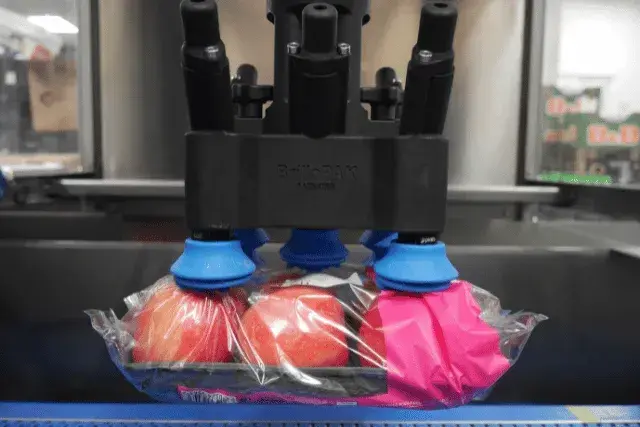
A pick and place end effector, which is a specialist tool that is attached to a robotic arm, is designed for grasping and relocating items on manufacturing and packing lines. It uses a precision grip to accurately pick up objects and place them in designated locations. The design of a pick and place end effector varies according to the needs of the industrial application but encompasses different mechanisms, such as vacuum, mechanical, or magnetic grips, to handle different materials, shapes, and weights. The distinction between a swift, efficient packing process and a sluggish, error-prone one hinges on the quality of the pick and place end effector. In this article, we’ll explain what features determine the effectiveness of an end effector.

Precision And Control
Central to an efficient end effector is its ability to exercise precise control over its movements and applied force. Extreme accuracy is crucial, especially when handling delicate or small items, as it ensures objects are picked and placed without inflicting damage upon them. The subtlety in movement and the meticulous application of force distinguish superior end effectors from their inferior counterparts.
Adaptability And Versatility
The size of an end effector plays a significant role in its effectiveness. The correct size not only suits the application, the workspace, and the objects being manipulated but also contributes to the overall adaptability and versatility of the device. A one-size-fits-all approach simply does not suffice when the variety of objects that need to be handled can be extensive.
Sensors And Feedback Systems
The incorporation of advanced sensors for optimum position and force, along with vision systems, allows end effectors to accurately detect and handle objects. These sensors provide real-time feedback, enabling the end effector to make minute adjustments which is crucial to maintain precision in fast-paced environments.
Speed And Cycle Time
An efficient end effector operates at high speeds without compromising accuracy or causing damage to products. The key lies in minimising cycle time, thereby maximising throughput - a critical factor in high-volume production environments.
Ease Of Programming And Operation
Flexibility in programming and ease of operation are essential, especially in settings in which the type of object being handled may frequently change. An end effector that can be easily reprogrammed and adjusted for different tasks reduces downtime and increases overall efficiency, as operatives can quickly change the required components without the production or packing line grinding to an extended halt.
Gripping Mechanism
Different applications require different gripping mechanisms — mechanical, vacuum, or magnetic, for instance - each of which offers its own advantages. The choice of gripping mechanism depends on the application. The mechanism you utilise should prioritise versatility, allowing the same end effector to adeptly handle a diverse range of products. This adaptability ensures that a single mechanism can meet multiple operational needs, streamlining processes and enhancing efficiency across different applications.
Durability And Maintenance
Finally, given the repetitive nature of pick and place tasks, robot end effectors should be built to deliver exceptional durability. They often come with designs that simplify maintenance and the replacement of parts, thereby minimising downtime and extending the lifespan of the equipment. Consequently, businesses can save money in the long-term and enhance their return on investment.
Discover Our Pick And Place End Effectors
For more information on our state-of-the-art pick and place end effectors for your production or packing lines, please browse our range or call Brillopak on 01622 584113 to chat to our team.

Why Selecting The Right End Effector Type Is Key To Effective Automation
Understanding The Capabilities Of End Effectors In Robotics
No Comments Yet
Let us know what you think