
-1.svg "brillopak-automated-packing-machine-specialists- (2)-1")

By Brillopak on May 25, 2024 3:29:48 PM
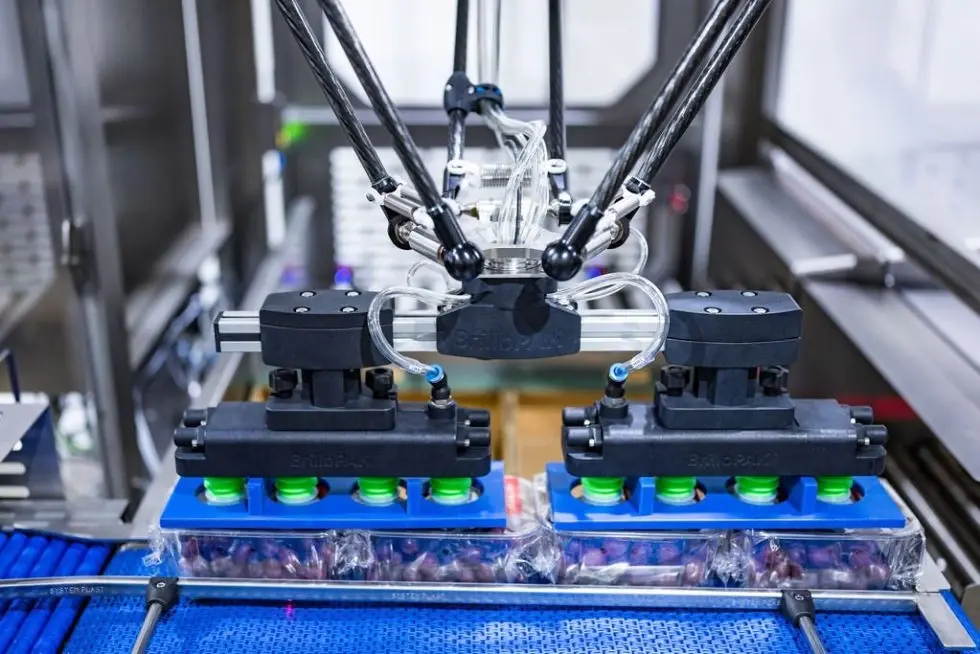
In the ever-evolving world of robotics, end effectors play a pivotal role in defining the capabilities and versatility of robotic systems. These sophisticated devices, attached to the end of robotic arms, serve as the critical interface between machines and their working environment.

From delicate handling tasks to precise measurements and complex manipulations, end effectors are the key that enables robots to effectively interact with the world around them.
In this article, we'll explore the various types of end effectors, their functioning principles, and their game-changing applications in food processing and manufacturing industries.
What Are End Effectors In Robotics?
End effectors are a type of end of arm tooling (EOAT), which is a catchall term for any device attached to the end of a robotic arm. The effector is designed to interact with the environment in some way and perform a specific task – such as quality inspection, force or torque measurement, sorting and packing, welding, painting, and so on.
With reprogramming, robots can be tailored to various roles in a factory, maximising their capabilities. The end effector allows the robot to manipulate objects, apply forces, and perform sensory operations as required, expanding its operational value. End effectors can also enhance workplace safety. By equipping robots with the appropriate end effectors, the machines can operate in hazardous environments or handle dangerous materials, removing the risk from your employees.
So, what are the main end effector types?
Your choice of end effector matters as it directly impacts the effectiveness and efficiency of your robotic system. There are three main types of end effector – grippers, tools, and sensors. Each application serves a distinct purpose and is suited to different types of machinery.
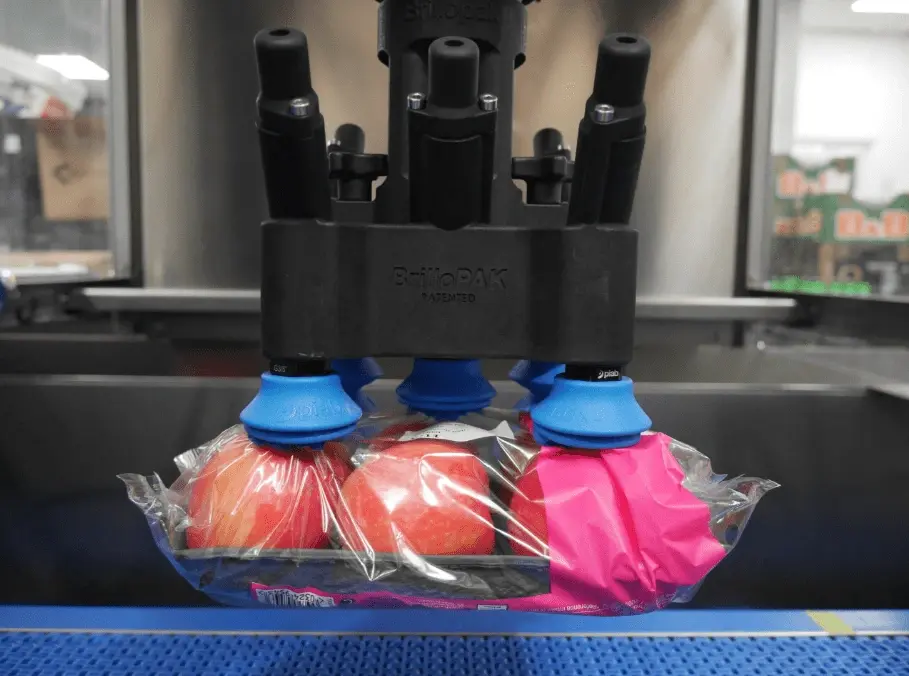
1. Grippers: Grippers use fingers or jaws, or suction via a vacuum to grasp objects, and are ideal for handling delicate items and irregular shaped objects within an assembly or packaging line. Some machines also employ magnetic grippers to lift and move ferrous materials.
2. Tools: The tools used as end effectors include welding torches, screwdrivers, drills, cutting tools, and other tools used in cutting operations, robotic milling, trimming, and machining.
3. Sensors: A variety of sensors can be used as end effectors, including cameras, proximity sensors (for collision avoidance and object positioning) and force/torque sensors for more precise control during delicate tasks.
Within these categories are a huge variety of designs and variations tailored to specific applications. At Brillopak, for instance, we have over 35 different end effector designs, highlighting the versatility and customisation options available to customers in the field of robotics.
Applications In The Food Sector
In the food industry, end effectors are pivotal in increasing efficiency, hygiene, and cost-effectiveness, while also reducing human error. Here’s how end effectors are applied in specific areas:
- Packing: Automated pick-and-place machines equipped with vacuum grippers are ideal for handling smooth-surfaced products. Soft grippers, on the other hand, gently grasp fragile items like soft fruits, baked goods, and confectionery, reducing the risk of bruising or crushing.
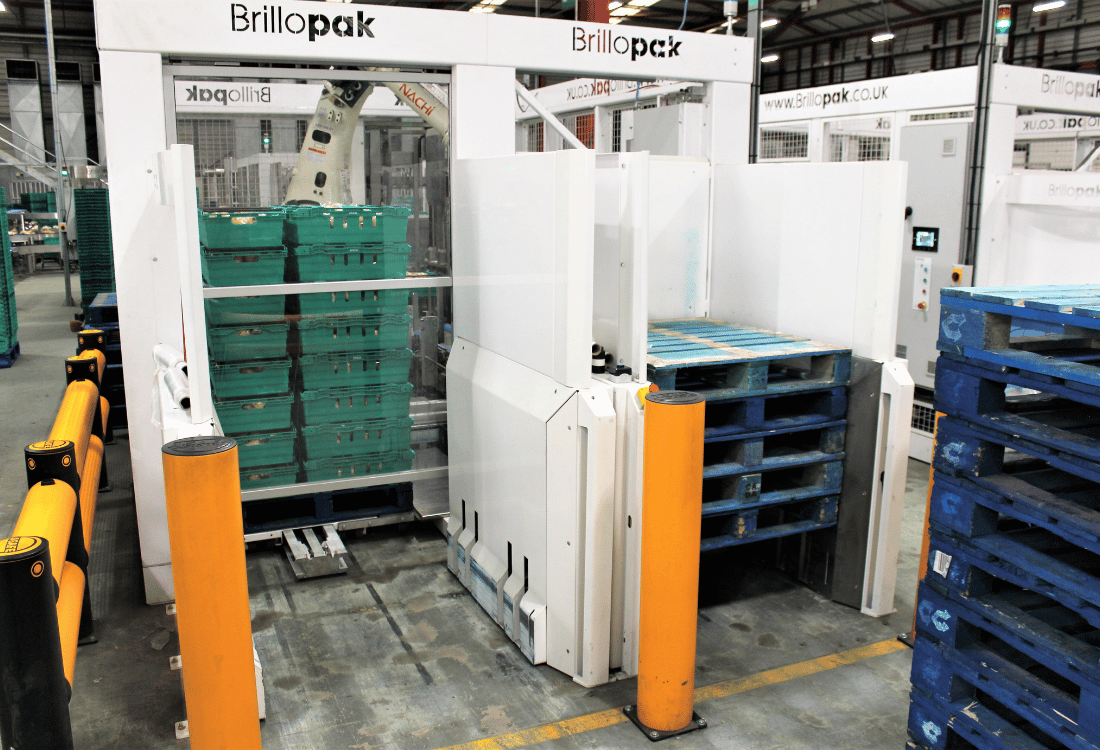
- Palletising: Vacuum grippers and mechanical grippers are commonly used to stack products onto pallets. Layer grippers can handle multiple items at once, placing entire layers onto a pallet efficiently, thus speeding up the palletising process.
- Denesting/Destacking: Vacuum grippers are used to separate and pick up nested items such as trays, containers, or lids from a stack. For metal items, magnetic grippers provide an efficient method of lifting and separating stacked objects, ensuring precision without damaging the products.
- End-of-Line Automation: In this critical phase, multi-functional grippers and tool changers play a significant role. These end effectors allow robots to perform multiple tasks in sequence, from packing to quality checking, enhancing overall production efficiency and ensuring high product quality.
As you can see, end effectors are crucial components in modern robotics, with wide-ranging applications across industries. Their ability to enhance efficiency, precision, and safety makes them invaluable assets in any automated operation. However, the world of end effectors is vast and constantly evolving, with new designs and capabilities emerging regularly to meet specific industry needs.
Find Out More
If you’re interested in exploring how the latest end effector technologies can benefit your specific operations and potentially transform your productivity, we invite you to reach out to our team of experts today. Our extensive experience and diverse range of over 35 different end effector designs allow us to provide tailored solutions for your unique challenges. To find out more about our end effectors and the ways they can deliver value in your operation, please contact one of the team at Brillopak today by clicking here.

Robotic Palletiser Pushes Morrisons Safety Envelope
Why Selecting The Right End Effector Type Is Key To Effective Automation
No Comments Yet
Let us know what you think