
-1.svg "brillopak-automated-packing-machine-specialists- (2)-1")

By Brillopak on Jun 25, 2025 10:00:06 AM
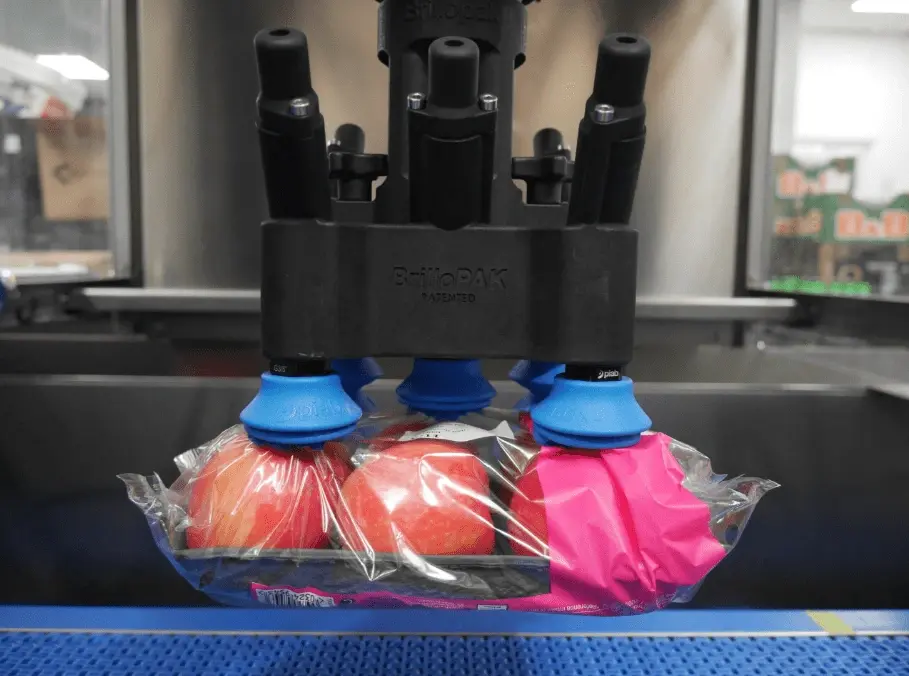
End effectors may not be the most glamorous element of a robotic palletising system, but they are undeniably one of the most important. The right type of end effector can unlock the full potential of your automated system, increasing overall efficiency and performance. In this article, we will explain why selecting the right end effector type is the key to effective automation in your packhouse.

What Are End Effectors?
An end effector is a tool attached to the end of a robotic arm, which allows the robot to interact with or manipulate its environment. Essentially, the end effector acts like a hand or grabbing device, and, depending on the system, can be used to pick up packages, stack crates, assemble parts, or weld metal.
End Effector Types
End effectors come in a variety of types that reflect their function, with the two most commonly used in automated packing systems being grippers and suction cups.
1. End effector gripper: grippers are the most widely used and versatile of end effectors, designed to pick, hold, and release a wide variety of objects. Grippers can be mechanical, using fingers or claws, magnetic, or even vacuum-based, depending on the product and the surface that needs to be handled. These are the end effectors of choice when handling irregularly shaped or porous materials. Some specialist ‘soft grippers’ are available to handle delicate vegetables, fruits, medical products, and baked goods in the food, agriculture, and pharmaceutical industries.
2. Suction cup end effector: suction cup end effectors are another common choice in the packing and warehousing sectors. Suction cups are effective at picking and placing flat surfaced items onto conveyor belts, within crates, and into pallets, and are capable of handling a variety of light to middle weight objects without risk of damage.
Why your choice matters:
- Task-specific performance: an end effector directly interacts with the environment and determines your robotic system’s ability to perform specific tasks. Therefore, choosing the appropriate end effector is key to ensuring that the robot can effectively carry out its intended functions without damaging the products.
- Productivity: investing in the right end effector can enhance your robotic system’s overall performance and efficiency, leading to increased throughput and a more profitable operation. The right choice can often make the difference in achieving a highly productive pack house workflow. More than this, selecting the right end effector for your application can often lead to a faster return on investment by improving production processes, increasing customer satisfaction, and improving profit margins long term.
- Adaptability: speed and flexibility are the two key factors in successful automation. The right choice of end effector will allow robotic systems to work more quickly and switch between tasks more seamlessly, and will equip it to perform a variety of tasks. This adaptability is essential if your business has diverse automation needs – e.g. packing, picking, and production within the same facility.
- Safety: the end effector is central to ensuring the safety of operators and products surrounding the robotic palletising system. Combining the appropriate gripper or suction cup end effector with advanced sensors can increase safety and efficiency in automated operations.
Book A Free Consultation With Brillopak Today
For more information about the right end effectors for your robotic palletising system, please book a free consultation with Brillopak today by clicking here.

Understanding The Capabilities Of End Effectors In Robotics
Understanding What Makes An Effective Pick And Place End Effector
No Comments Yet
Let us know what you think