
-1.svg "brillopak-automated-packing-machine-specialists- (2)-1")

By Brillopak on Dec 22, 2025 10:00:37 AM
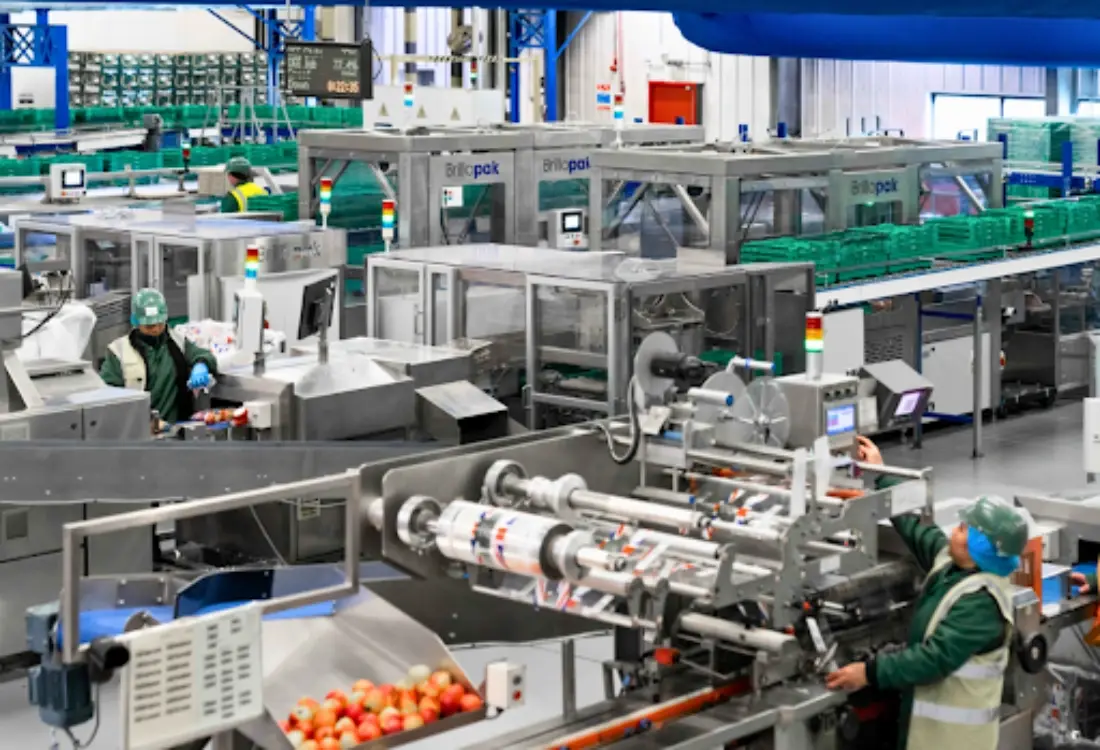
In a landscape defined by rapid market shifts, product variety, and supply chain uncertainties, modular automation - breaking down machinery into smaller, independent units that perform specific tasks – provides unmatched scalability and adaptability. It allows businesses to respond to new demands with speed and precision, moving beyond the limitations of rigid, traditional lines. Today, we look at how embracing a modular approach can enhance cost efficiency, simplify maintenance, and increase agility within your business.

The Compounding Costs Of Manual End-Of-Line Operations
Manual packing and palletising creates predictable problems that extend well beyond the immediate labour cost:
Inconsistent output quality: Human performance varies across shifts, between individuals, and throughout the working day. This variability translates directly into product inconsistency, customer complaints, and potential recalls.
Physical strain and injury risk: Repetitive lifting, reaching, and handling leads to musculoskeletal injuries. The resulting absenteeism disrupts production schedules and increases insurance premiums, whilst the Health and Safety Executive reports these injuries cost UK businesses £15 billion annually.
Limited scalability: Meeting demand spikes requires hiring and training temporary staff—a process that takes weeks and offers no guarantee of adequate skill levels. Seasonal production becomes a recurring staffing crisis rather than a manageable operational challenge.
Recruitment and retention difficulties: Manual packing roles are increasingly difficult to fill. High turnover means continuous recruitment costs, training investment in workers who leave within months, and perpetual knowledge gaps on the production floor.
These issues compound over time. The "cost" of manual operations isn't static, it accelerates as labour becomes scarcer and more expensive, whilst customer quality expectations continue rising.
Strategic Investment, Not Simple Substitution
Brillopak's clients typically achieve return on investment within 1-2 years of implementing end-of-line automation, a timeframe that reflects genuine operational transformation rather than simple cost displacement.
Consider the mathematics: a robotic packing system operating at 50-150 packs per minute doesn't just go beyond the capabilities of manual packers, it eliminates bottlenecks that throttle your entire production line. Products move from manufacturing to dispatch faster, with consistent quality and without the variability introduced by manual handling.
The investment case strengthens when accounting for indirect benefits. Automated systems operate consistently across all shifts without performance degradation. They don't require sick leave, supervision intensity decreases, and production planning becomes more predictable. Quality control shifts from reactive inspection to proactive process management.
Brillopak's modular approach enables phased implementation, allowing manufacturers to automate incrementally without replacing entire production lines. A PAKstation semi-automated system, for instance, provides 15% speed increases and 14-month payback whilst maintaining manual operation flexibility, an accessible entry point that proves the concept before full automation.
Elevating Your Workforce Value
The most significant and frequently overlooked benefit of end-of-line automation lies in workforce transformation rather than reduction.
Automating repetitive packing and palletising tasks doesn't automatically eliminate the need for people. It can reposition them into roles that generate more value: machine operation, quality oversight, technical troubleshooting, and process improvement. These positions offer better working conditions, more engaging work, and higher earning potential.
This shift creates a virtuous cycle. Better roles attract better candidates. Higher-skilled workers stay longer, building institutional knowledge and reducing recruitment costs. Training investment generates returns rather than being lost to turnover. Your operation becomes more attractive to skilled workers whilst competitors struggle to fill manual positions.
For operations managers facing rising employment costs, this represents a fundamental strategy shift: rather than attempting to minimise headcount, automation enables you to maximise the value and productivity of each team member whilst controlling overall labour costs.
Consistency As Competitive Advantage
In food manufacturing of fresh produce, meat, poultry, fish, and ready meals (where Brillopak specialises), product consistency directly impacts customer relationships, regulatory compliance, and brand reputation.
Automated systems execute every task identically. A UniPAKer packing system places products with the same precision on pack one as pack ten thousand. Palletisers build stable, uniform loads that minimise transport damage and optimise warehouse space. Vision systems verify pack integrity, correct labelling, and absence of contamination at speeds no manual inspector can match.
Automated systems generate precise production data, enabling real-time performance monitoring and evidence-based process improvement. You gain visibility into productivity trends, quality metrics, and equipment performance that manual operations simply cannot provide.
For customers, this consistency translates into reliability. Orders arrive on specification, on time, with predictable quality. For manufacturers, it means fewer returns, reduced waste, and protection against the reputational damage of quality failures.
Brillopak has completed over 500 factory layout plans, transforming manual operations into efficient automated facilities across diverse production environments. This experience encompasses everything from compact installations in space-constrained packhouses to complete end-of-line solutions integrating packing, palletising, and crate handling.
The company's 160+ years of combined team experience delivers practical insight into implementation challenges that theory overlooks: managing production during installation, training operators effectively, and integrating new systems with existing equipment. This expertise minimises disruption and accelerates the path to full operational capability.
Critically, Brillopak's British manufacturing base and UK-based service engineers provide responsive support when issues arise. In operations where downtime costs thousands of pounds per hour, local expertise and rapid parts availability represent genuine competitive advantage.
Transform Your End-Of-Line Operations
End-of-line automation addresses the fundamental economic pressures facing UK manufacturers: rising labour costs, recruitment challenges, and intensifying quality demands. Implemented strategically, it delivers sustainable cost reduction whilst improving output quality and creating more valuable roles for your workforce.
For operations managers seeking to build competitive advantage through operational efficiency, automated packing and palletising represents a proven, quantifiable investment with clear returns.
Discover How Automation Can Transform Your Operation
Brillopak's packing and palletising systems are proven across demanding food manufacturing applications. To discuss how end-of-line automation can reduce costs and improve efficiency in your specific production environment, book a free consultation today.
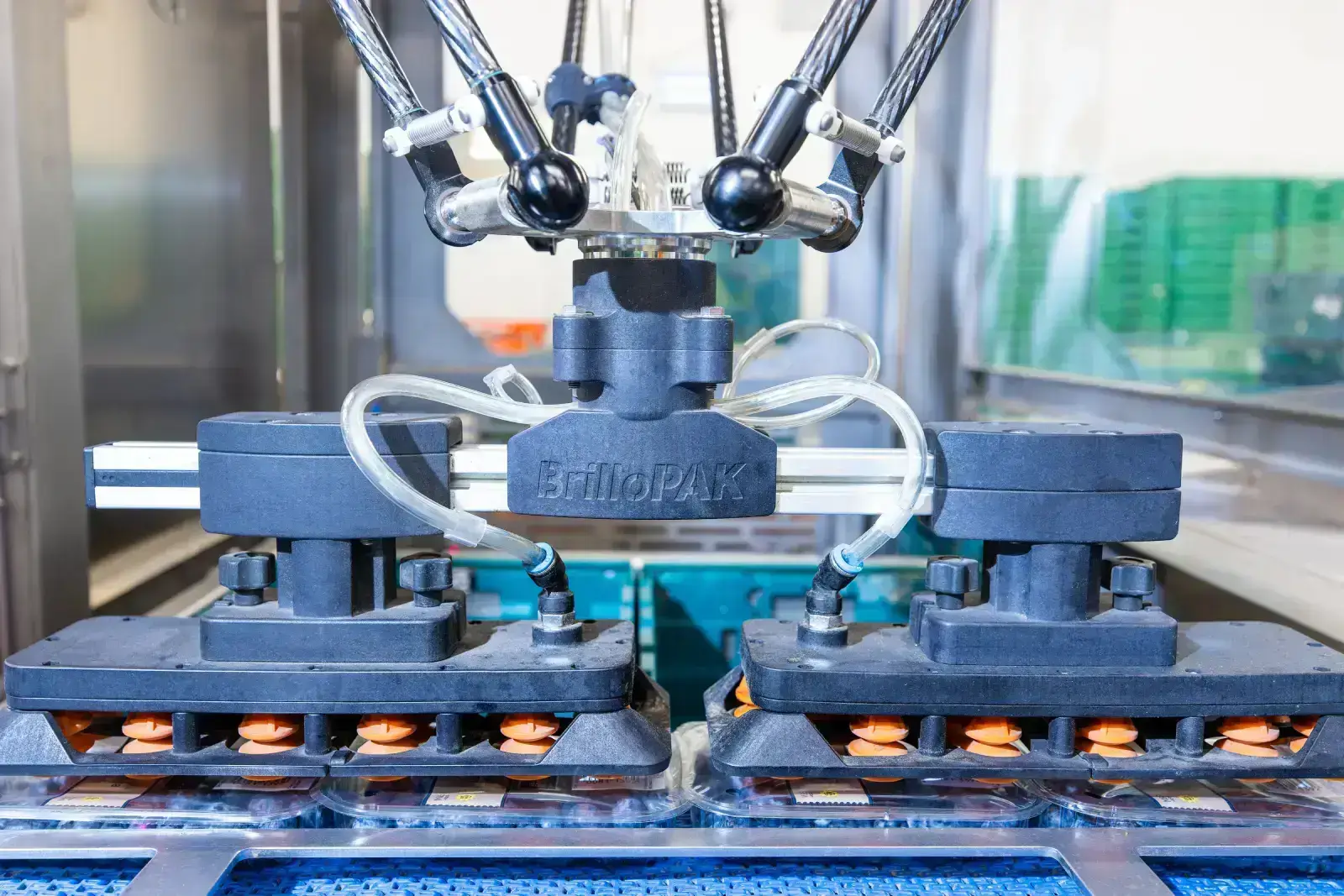
RowPAKer reduces labour costs for Soft Fruit Grower Edward Vinson
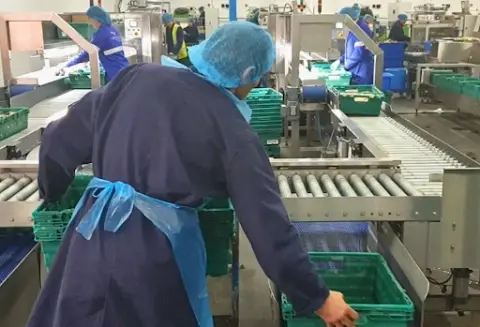
End-of-Line Automation For Machinery Savings And Staff Retention

No Comments Yet
Let us know what you think